Government Swag
and Promotional Products
Community | Public Safety | Recruitment
Run awareness campaigns, stock community events, and recruit for public safety from one approved catalog. We work inside your purchasing thresholds and are straight about domestic sourcing. No hidden fees, no stress.

 5.0 · Trusted by over 100+ businesses
Get a free demo
We will build a swag store for your organization. No commitment.
"*" indicates required fields
We reply within one business day. Your details are never shared.
No setup fee
No storage fee
No monthly fee
Free company store
Programs start when you're ready and scale with headcount. Nothing to warehouse, nothing on your books.
Zero inventory hassle
We handle inventory, fulfillment, and logistics while you focus on rewarding your team.
Flexible redemption
Staff spend earned points on premium items, making recognition personal.
HRIS integration
Connects to your HRIS, automating rewards for milestones and achievements.
Dedicated account manager
One point of contact who knows your brand, your budget, and your reorder cadence.
Useful Beats Decorative in Public Sector Buying
Government buyers keep an item because it does something. Utility is the single biggest reason promotional products survive in this sector, ahead of appearance, novelty or brand, and it outranks every other consideration by a wider margin here than in any industry we serve.
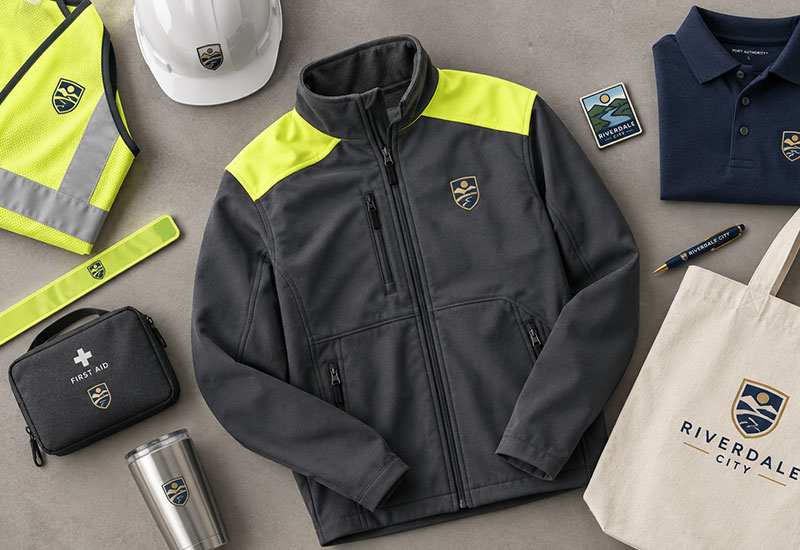
That shapes the catalog before anyone talks about price. Reflective gear, first aid kits, sturdy totes, magnets that stay on a fridge for a decade. Items that get used are items that keep working for the department that handed them out.
The other constraint is domestic sourcing, which in public sector procurement is often a requirement rather than a preference. We will tell you plainly what can be made in the United States and what cannot.
Why CS4 Swag for Government Agencies?
What our clients tell us actually made the program work.
Request a demoBuilt for Procurement
We work inside your purchasing thresholds and provide whatever documentation your purchasing office needs, whether that is a quote, a bid response or a cooperative contract route.Straight Answers on Domestic Sourcing
For each item we tell you whether it can be made in the United States, what the alternative is, and what the difference costs, instead of labeling a whole catalog.No Recurring Line Item
No setup fee, no storage fee, no monthly platform fee. Nothing to budget, justify and re-approve every fiscal year.Ready at Fiscal Year End
Specify items early and remaining budget can be committed against held stock late in the year, rather than starting a sourcing exercise with weeks left.What You Put Your Logo On Matters
At CS4 Swag, we go beyond ordinary promotional products. We partner with top-tier suppliers (from eco-conscious brands to trusted industry leaders) to curate premium, stylish swag that reflects your brand’s values. Every project is thoughtfully designed to ensure quality and impact, with no setup or storage fees.
Our white glove service delivers hassle-free, sustainable swag that elevates your brand and resonates with employees and clients alike.












Government Promotional Products for Agencies and Municipalities
Public sector merchandise works when it survives procurement, meets any domestic sourcing requirement, and is useful enough that a resident keeps it. Get those three right and a single order keeps working for years at a cost per impression no other channel matches.
Getting them right means understanding how agencies actually buy, which is unlike any private sector customer. Purchases run through a procurement office with bid thresholds, sourcing preferences are frequently written into policy, and the fiscal calendar drives a spend pattern nobody can move.
This page covers what public sector buyers actually order, how procurement and cooperative contracts work, what domestic sourcing does to a catalog, and how fiscal year end shapes the whole year.
What Agencies Actually Order
Public safety and awareness campaigns are the largest recurring category. Fire prevention week, water conservation, emergency preparedness and traffic safety all run annually and all need items a household will keep near the door or in a vehicle.
Community events are the second: parades, town festivals, park programs and neighborhood nights. These are high-volume and family-facing, which puts a floor under quality because anything flimsy is a bad look for the department in front of the people funding it.
Recruitment is growing across police, fire, transit and public works, all of which compete for the same shrinking pool of applicants. Career fair materials in this sector do more work than in most, because a candidate is weighing a public role against private sector pay.
Employee recognition and service awards round it out. Public sector tenure runs long, so milestone programs here reach further up the year scale than most private employers ever need.
Procurement, Thresholds, and Bids
Almost every agency has a dollar threshold below which a department can buy directly and above which the purchase goes to quotes or a formal solicitation. Knowing where that line sits for your organization changes how a program should be structured.
Below the threshold, departments can order what they need from an approved catalog without a new procurement action each time. Above it, we can support a quote or respond to a solicitation with the documentation your purchasing office requires.
Tell us your thresholds at the outset. The most common reason a public sector program stalls is not price, it is discovering mid-process that the purchase needed a solicitation nobody scheduled.
Cooperative Purchasing Contracts
Cooperative contracts let an agency buy through an agreement another entity has already competitively solicited, which removes repeat bidding. In practice they are the most common route to a durable public sector relationship.
If your agency requires purchases to run through a specific cooperative or state term contract, tell us early. Whether a given vendor holds a particular cooperative agreement is a factual question with a yes or no answer, and it is far better established in the first conversation than discovered at the point of order. We would rather tell you a route is unavailable than let a program get built on an assumption.
Domestic Sourcing
Made in USA carries more weight in this sector than any other, and for many agencies it is written into policy rather than left to preference.
It also genuinely constrains the catalog. Some categories have strong domestic manufacturing and some have almost none, and no supplier can source their way around that. What we can do is be specific: for each item you are considering, we will say whether it can be made domestically, what the alternative is, and what the difference costs, rather than applying a vague label to a whole catalog.
Where a requirement is absolute, we build the catalog from domestic lines only, and you will see a narrower range as a result. That is a real trade and worth making deliberately.
Fiscal Year End
Public sector budgets rarely carry over, which produces a reliable surge of spending as the fiscal year closes and a corresponding quiet period after it opens.
The surge is predictable, so it is avoidable as a scramble. Departments that specify items earlier in the year can commit remaining budget quickly at year end rather than starting a sourcing exercise with weeks left. Because we hold stock, a late decision draws from inventory instead of triggering a production cycle that will not land before the books close.
Departments Ordering Independently
A city or county is many buyers wearing one brand. Parks and recreation, public works, transit, the library system, emergency management and the public information office all order, and all have separate budgets and separate priorities.
An approved catalog with department-level access and budgets means each one orders what it needs without central purchasing becoming an order desk, while spend stays visible by department for the annual reporting everyone has to produce anyway.
Elections and Civic Outreach
Voter registration drives, census-style counts and civic education campaigns run on their own cycle and often on separate funding, sometimes with rules about what may carry an official seal.
These campaigns are usually high volume, short notice and tightly scoped, which makes them a poor fit for anything with a long production window. Drawing from held stock lets an outreach office commit late without missing the window, and keeps the items neutral and functional rather than promotional in a way that could raise questions.
What It Costs
Product and decoration. No setup fee, no storage fee, no monthly platform fee, and no minimum order, so a small department can order what it needs without triggering a purchase that has to be justified to anyone.
The absence of a recurring charge matters here for a specific reason: a subscription is a line item that must be budgeted, justified and re-approved every fiscal year, and it is the first thing cut in a tight cycle. A per-order cost is simply a purchase.
Getting Started
Tell us which departments buy today, your purchasing thresholds, whether a cooperative contract is required, and how strict your domestic sourcing policy is. We will propose a catalog that fits inside all four and provide whatever documentation your purchasing office needs.
Nothing is committed until purchasing has what it requires. Request a demo and we will put together a proposed program for your agency.
Questions we get on this
Still stuck? Contact us.
Can you support a formal bid or solicitation?
Yes. Tell us your thresholds at the outset and we provide what your purchasing office requires, whether that is a written quote, a bid response or documentation for a cooperative route. The most common reason a public sector program stalls is discovering mid-process that a purchase needed a solicitation nobody scheduled.
Are you on a cooperative purchasing contract?
Ask us directly for your specific cooperative or state term contract and we will give you a yes or no. It is a factual question and a bad one to leave assumed, because a program built on the wrong purchasing route has to be unwound at the point of order rather than at the start.
Can you source products made in the United States?
For many categories yes, and for some there is very little domestic manufacturing, which no supplier can source around. We tell you item by item what is achievable, what the alternative is, and what it costs. Where the requirement is absolute we build from domestic lines only, and the range is narrower as a result.
Can parks, transit and public safety each keep their own catalog?
Yes. Each department gets its own access, budget and catalog inside one agreement, so central purchasing sets the rules once instead of becoming an order desk. Spend still reports by department for annual reporting.
We need to commit budget before fiscal year end. Is that realistic?
It depends entirely on how early the items were specified. Choosing products earlier in the year means a late decision draws from held stock rather than starting a production cycle that will not land before the books close. That is the single biggest difference between a smooth year end and a scramble.
What works for a public safety or awareness campaign?
Things a household keeps near the door or in a vehicle. Reflective items, first aid supplies, sturdy totes and magnets all outperform novelty giveaways here, because utility is the main reason anything survives in this sector.
Do you supply reflective and hi-vis items?
Yes, including certified hi-vis apparel where a class rating is required. Tell us the standard the item has to meet and we source certified stock and confirm the decoration will not compromise the rating.
What do police, fire and public works recruitment events need?
Materials that make a public role look like a serious career, because candidates are weighing it against private sector pay. Fewer, better pieces at a career fair do more than volume, and the same applies to anything given to a candidate who reaches interview stage.
What counts as government promotional products?
Branded items bought by public agencies for community outreach, public safety and awareness campaigns, recruitment, civic events and employee recognition. What distinguishes them from corporate swag is that purchasing runs through a procurement office with thresholds, and domestic sourcing is often written into policy rather than left to preference.
Do you work with special districts, transit authorities and utilities?
Yes. Water districts, transit agencies, utility districts and similar bodies buy in much the same pattern as a municipality, with outreach campaigns, safety messaging and recruitment, and the same procurement constraints apply.
Is this practical for a small city or town?
Yes. There is no minimum order and nothing recurring to pay, so a town ordering once or twice a year is served on the same terms as a county. The catalog is smaller and the purchasing route is usually simpler, but the mechanics are identical.
Start Your Company Swag Store
Start today and make a lasting impact on team morale, retention, and engagement.